Design the worksite around the heating system.
The GM2000 is Geocadia’s own drilling rig. It creates the borehole that houses the closed-loop collector and provides the ground connection for the complete heating system.
For a property owner, the work starts with the building. Heat demand, ground conditions, access and the route to the heating centre shape the drilling plan. Considering those inputs together gives the project team one practical basis for placing equipment and coordinating the work.
The rig works alongside compressor support, rod handling and cuttings containment. Access routes and working areas also need to fit the property. Geocadia brings those elements into one worksite layout before field delivery begins.
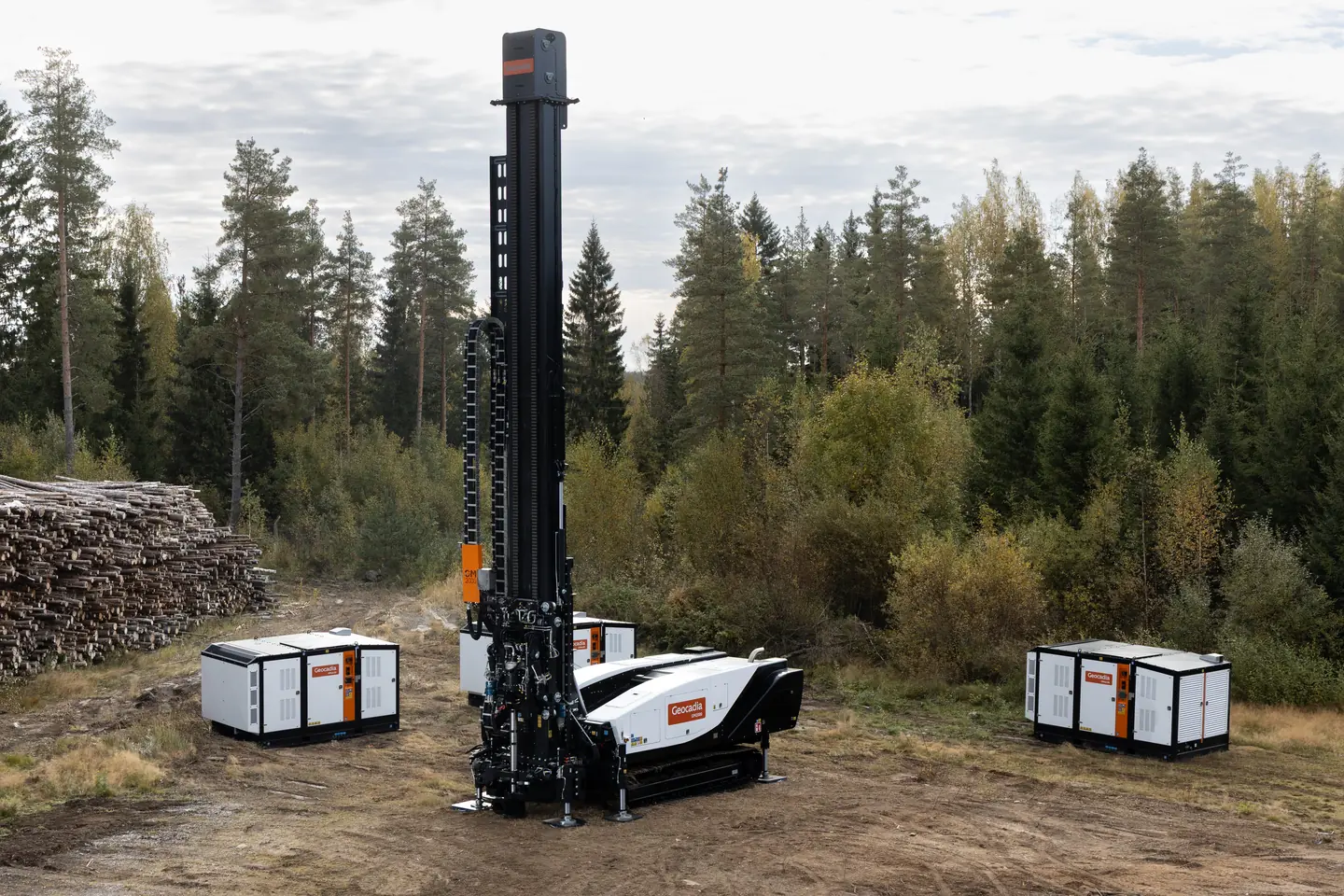
Bring the working assembly into one plan.
The drilling assembly, mast, stabilisers, hoses and connections are part of how the borehole is delivered. Making these interfaces visible helps the field team prepare the setup, inspection points and working sequence around the selected equipment.
That preparation also connects the drilling task to collector installation and the record of the completed borehole. The final arrangement remains property-specific because ground conditions, access and the wider system design differ from one project to another.
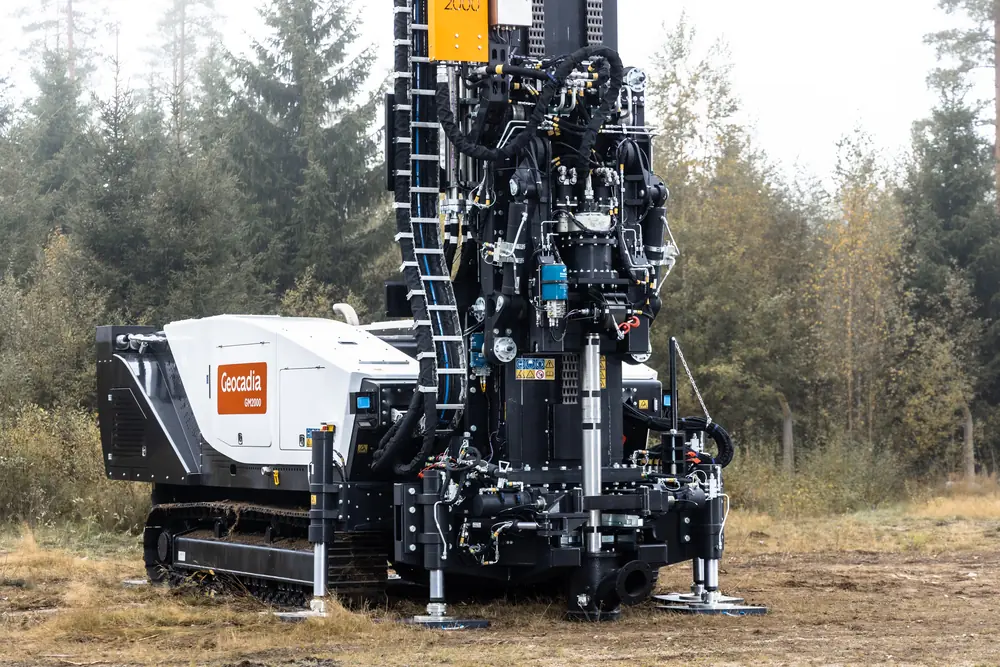
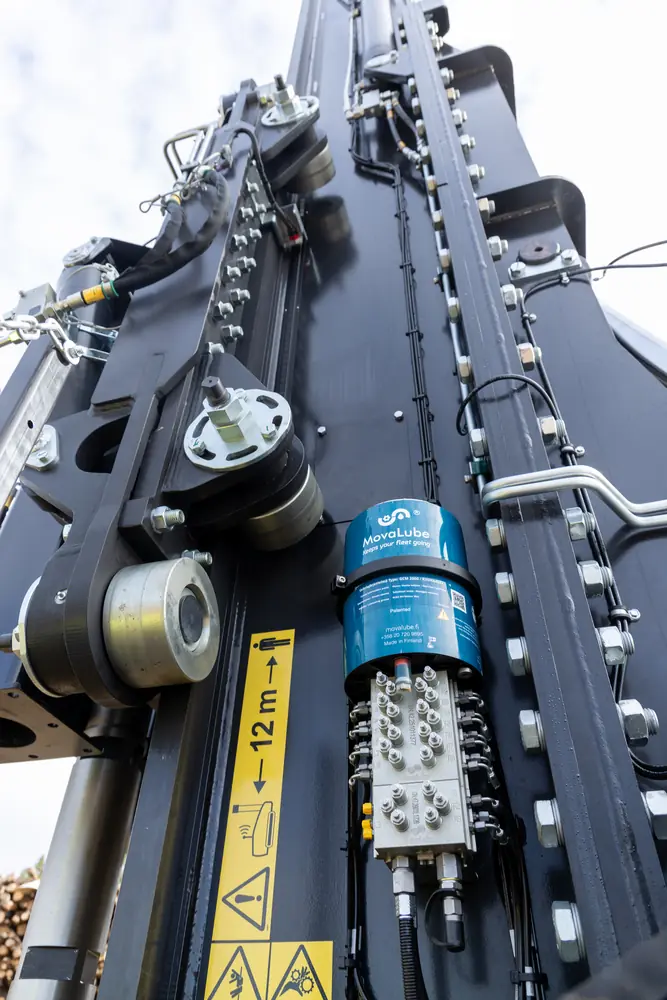
Keep the operator connected to the process.
The GM2000 control interface brings drill-string status, load, speed, water pressure and air pressure into view. The operator can follow these working inputs as conditions change. GM Tracker records drilling data for follow-up and handover.
The rig also depends on support equipment that can be inspected and serviced in the field. Access to the engine, hoses and cooling components helps the delivery team coordinate equipment readiness around the drilling programme.
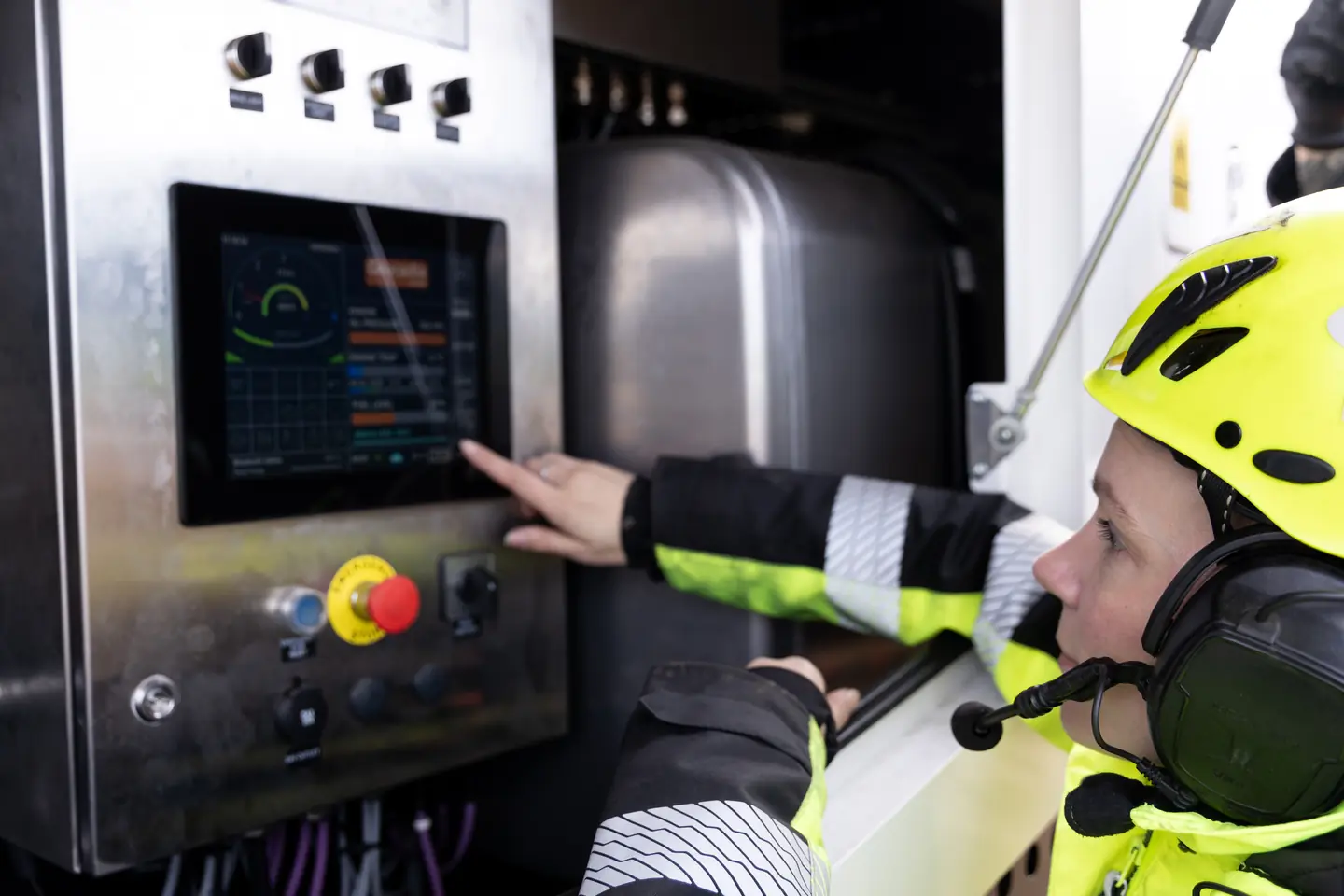
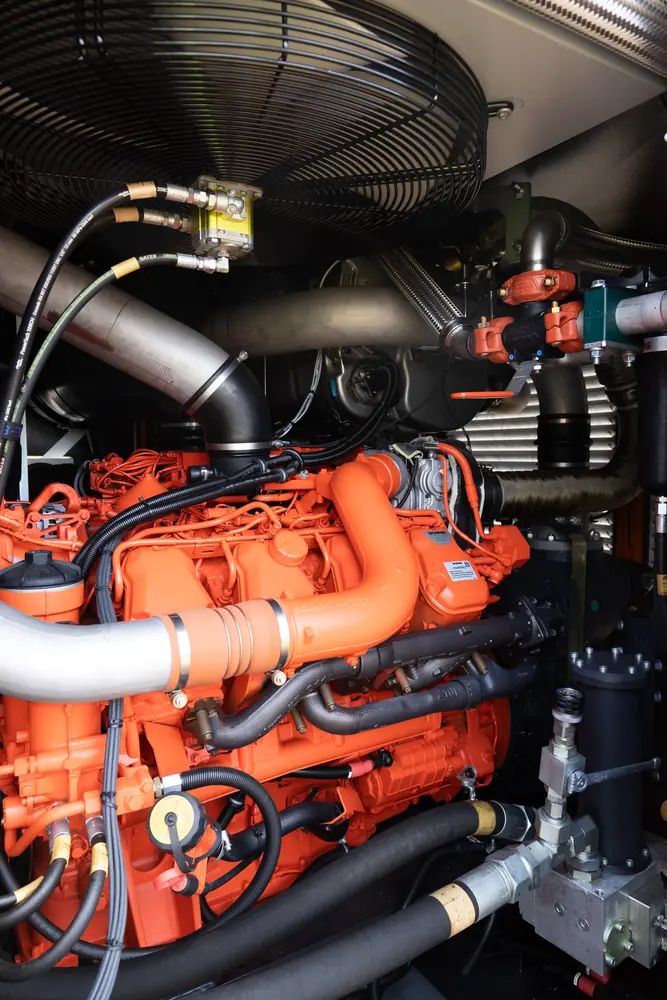
Geocadia’s software and controls connect field execution with drilling records and the wider system context. That continuity gives the delivery team a clearer record to carry into commissioning.
Carry the drilling record into useful heat.
The borehole supplies the source side of the complete heating system. Heat pumps, circulation, storage, filtration, controls and metering form the heating centre that connects that source to the building.
Commissioning checks the complete installation before handover, including temperatures, flows, controls and the building connection. The property team receives a documented starting point for operation and maintenance, with the borehole and heating centre understood as one system.
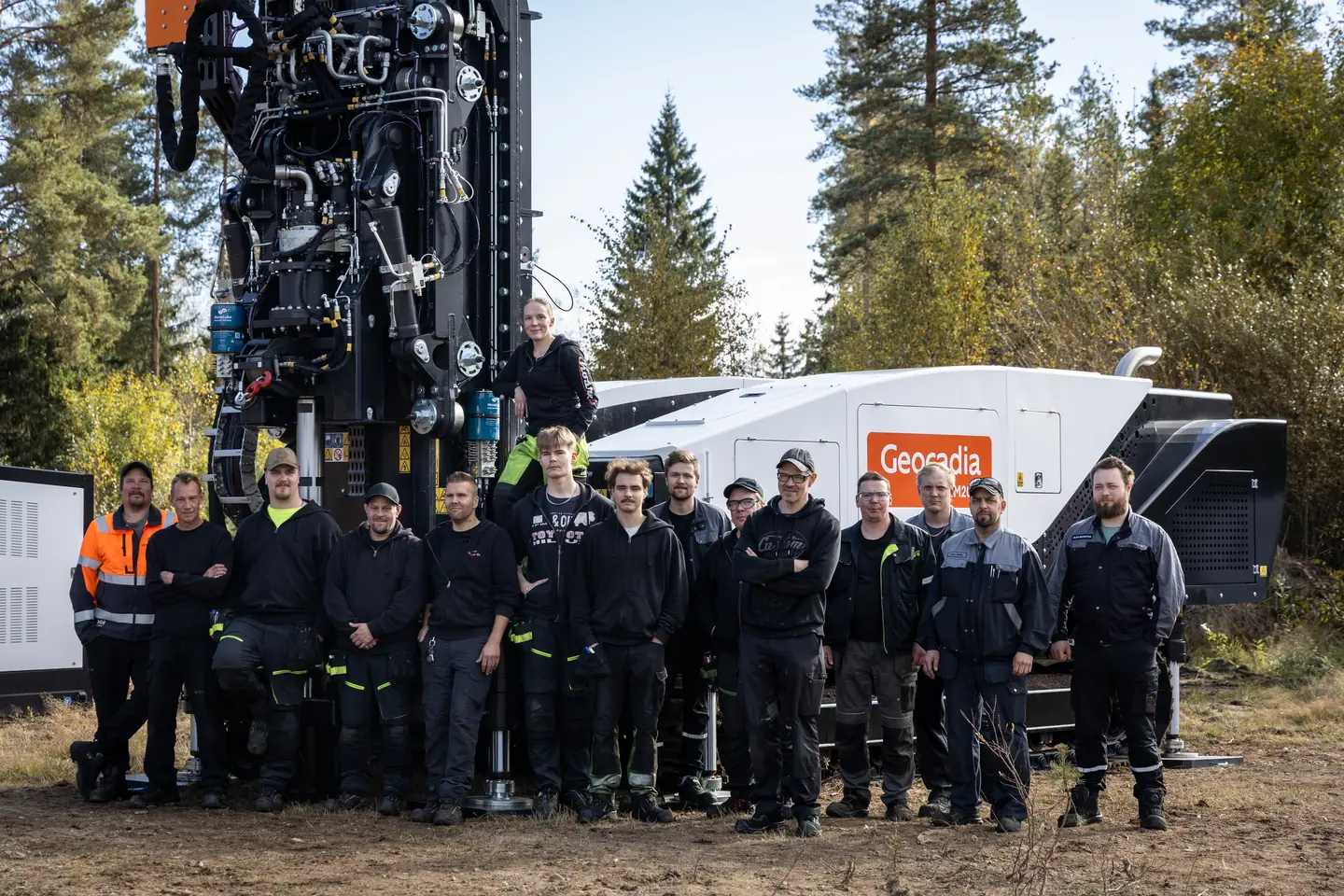
Explore how the complete system works, then compare the commercial routes for moving a property project forward.
Sources from Geocadia
Explore the product, complete-system and control information behind this overview.
- Geocadia GM2000: equipment and drilling setup.
- The complete heating system: design, installation and commissioning.
- Software and operator controls: current capability and roadmap.
Start with your property.
Share the address, current heating arrangement and rough heat demand. We can identify what the next assessment needs.
Discuss your heating system →